

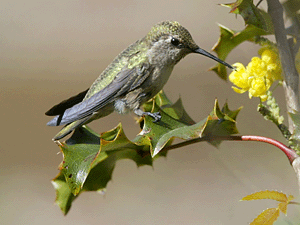
 female Anna’s Hummingbird on Oregon Grape©Donald Jedlovec |
| Hummingbird Gardens |
 |
Invite Hummers to your garden. . .
Jewels of the bird kingdom, Hummingbirds beguile us with their glorious colors and remarkable acrobatics. They hover, fly forwards, backwards, sideways and upside down. Their wings beat up to 200 times per second, and they reach speeds of 50 mph. Make them regular visitors to your home by planting their favorite natives, plants that evolved with hummers and bloom just when they need them. Gooseberry (Ribes lobii, divaricatum) is a favorite: it may be responsible for their early breeding season. Migrant hummingbirds arrive with the flowering of our red current (Ribes sanguineum) in March, another cherished source of nectar. Review the list of nectar sources below to help you choose your next garden addition.
Hummingbirds are an American (North and South) treasure, found nowhere else in the world. Four hummingbird species reside in, or regularly visit, The Pacific Northwest. Anna’s hummingbirds are year-round residents west of the Cascades and in coastal California. Seasonal visitors include Rufous hummingbirds, seen throughout the Pacific Northwest, and Calliope and Black-chinned hummingbirds, who are found east of the mountains. For detailed species information and pictures, visit www.hummingbirds.net/species.html (see also resources, below).
Hummingbird nests are diminutive works of art: built with spider web and plant down on horizontal tree branches, they are just large enough to contain a few small (jelly-bean sized) eggs and the warming breast of mama hummer. The nests are decorated with lichen, which provide camouflage. Amidst the tree canopy, they all but disappear.
Hummers love water – they are very fond of mists and sprays. If you plant a garden with a combination of their favorite native nectar sources and a misty fountain, hummingbirds will entertain all summer!
| Penstemon serrulatus |
Delphinium trolifolium |
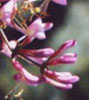
Red-flowering Current |
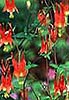
Western Columbine |
Hairy Honeysuckle |
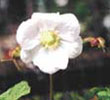
Thimbleberry |
 |
 |
 |
 |
 |
 |
TreesArbutus menziesii, Madrone Cornus Nuttallii, Pacific dogwood Crataeagus douglassii, Black hawthorne Malus fuscaPacific crabapple Prunus emarginata, Bitter cherry Prusus viginiana, Chokecherry Rhamnus purshiana, Cascara Salix spp., Willows |
ShrubsAmelanchior alnifolia, Serviceberry Arctostaphylos columbiana, Manzanita Ceanothus integerrimus, thrysiflorus, Deerbrush, Wild lilac Cornus stolonifera, Red-twig dogwood Holodiscus discolor, Oceanspray Mahonia spp., Oregon grape Rhododendron occidentale, Wild azalea Ribes divaricatum, lobbii, Wild gooseberry, gummy gooseberry Ribes speciosum, red gooseberry Ribes aureum, sanguineum, Golden currant, Red-flowering currant Rubus parviflorus, Thimbleberry Rubus spectabilis, Salmonberry Sambucus spp., Elderberry Sorbus sitchensis, Sitka mountain-ash Spiraea spp., Spirea species Symphoricarpos albus, Snowberry Vaccinium parvifolium, Red huckleberry |
Wildflowers and Vines
|
Hummingbird FeedersHummingbird feeders provide sugar-water as an alternative to flower nectar. They supplement hummers’ natural food sources (flower nectar and insects). Feeders can increase the hummingbird population in your garden, bring birds up close for viewing, and fuel their pollinating and insect-eating work. If you use a window-mounted feeder you will get great close-ups, and placing your feeder near cherished native plants will attract the birds quickly. Here in the Pacific Northwest, feeders provide food for Anna’s hummingbirds, who reside here year-round, when nectar sources are scarce. The recipe for “nectar” is four parts water to one part sugar. Boil the water, then stir in the sugar until dissolved, and cool. Alternatively, you can use super-fine sugar (“baker’s sugar”, available at many supermarkets) and avoid the cooking part, although boiling the water is said to delay spoilage. Red food coloring is not necessary (and may be harmful); a little dab of red on your feeder is all it takes to attract hummers, and once they know where your feeder is they will return faithfully. Be sure to wash out your feeder with hot water (no soap) and replace the sugar-water about once a week, to avoid spoilage and protect your visitors from disease. When the weather warms up above 80 degrees, change the solution every few days. Once a month, soak your feeder in a mix of 1/4 cup bleach to a gallon of water for an hour, rinse and refill. For really good, detailed information about hummingbird feeders, visit hummingbirds.net/feeders.html. |
Hummingbird Websites
- Hummingbirds.net
- Hummingbird photography
- birds.cornell.edu
- The Hummingbird WebSite
- The Hummingbird Society
Resources
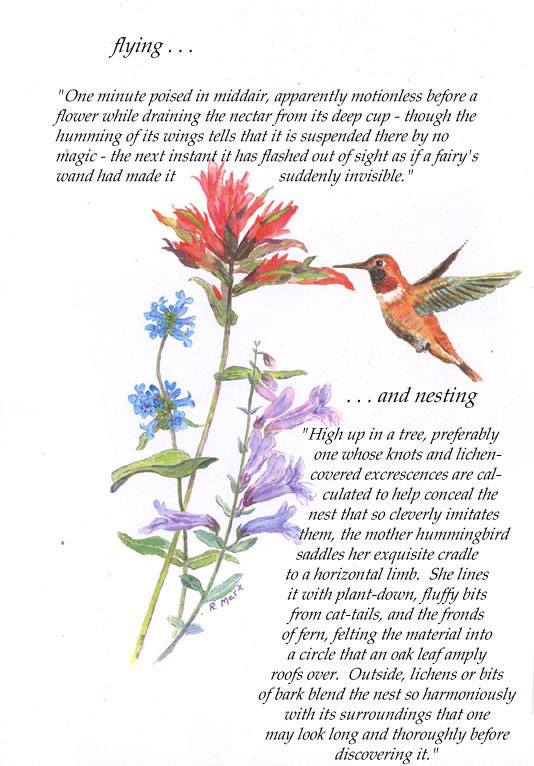
- Quote source from picture (above): Bird Neighbors by Neltje Blanchan
- Link, Russell. Landscaping for Wildlife in the Pacific Northwest, University of Washington Press in association with the Washington Dept. of Fish and Wildlife, Seattle, 1999
- Roth, Sally. The Backyard Bird Feeder’s Bible, Rodale Inc., 2000
- Sibley, David. The Sibley Guide to Birds, Alfred A. Knopf, New YOrk, 2000
- Udvardy, Miklos D. F. The Audubon Society Field Guide to North American birds, Western Region, Alfred A. Knopf, New YOrk, 1977